





Overview
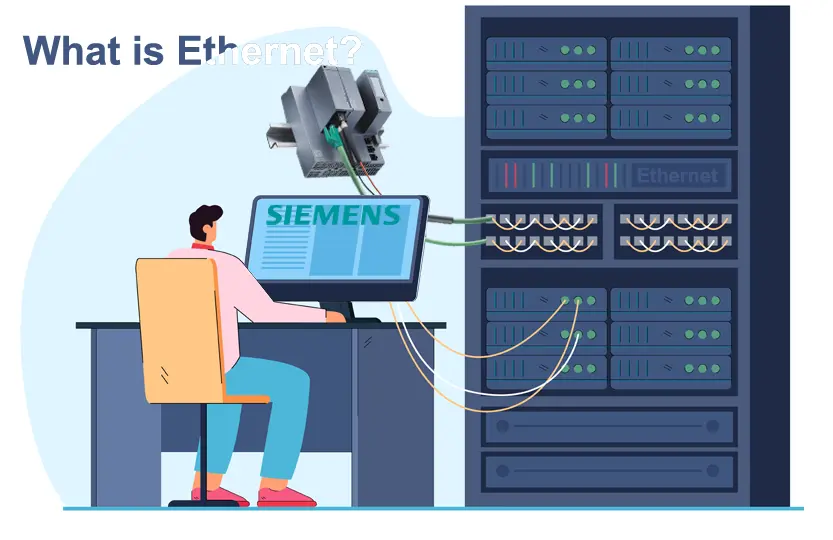
Ethernet is the foundation of modern wired communication networks, enabling computers, servers, and devices to connect and share data seamlessly. Originally developed in the 1970s and standardized as IEEE 802.3 by the Institute of Electrical and Electronics Engineers (IEEE) in 1983, Ethernet has evolved into the most widely used networking technology in the world.
It forms the backbone of Local Area Networks (LANs), linking multiple devices within limited areas such as homes, offices, factories, and data centers. Over time, Ethernet has transitioned from coaxial cabling to twisted pair copper wires and fiber optic cables, offering greater speed, reliability, and scalability.
How Ethernet Works
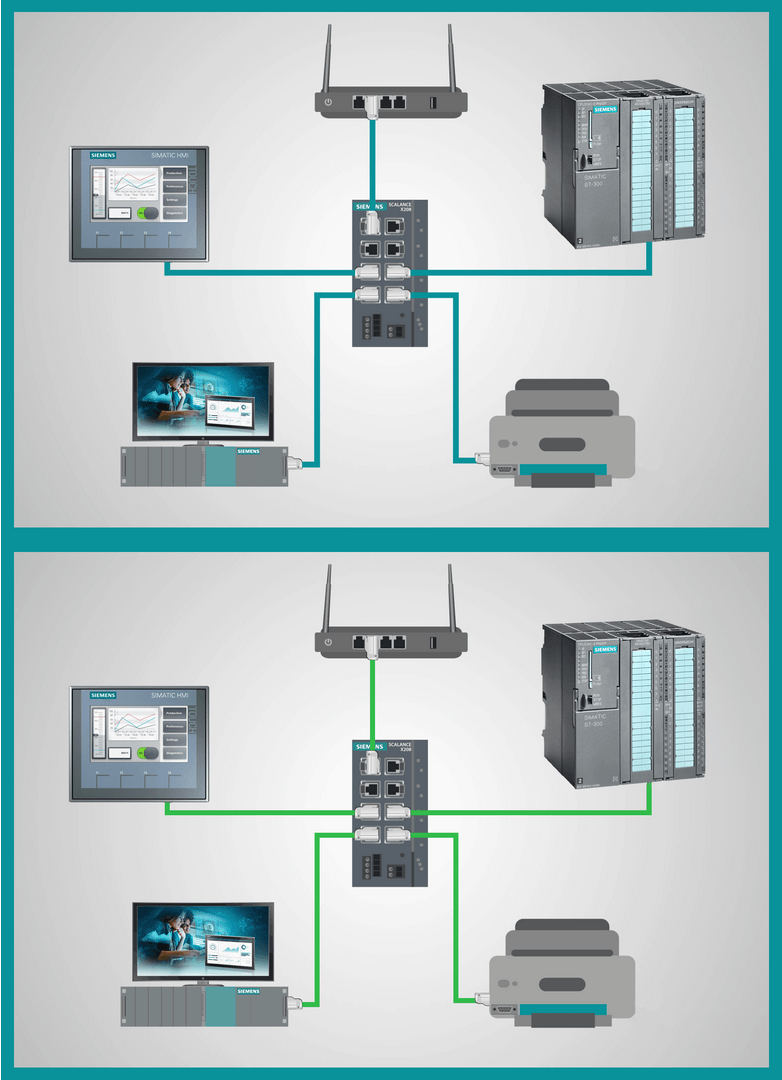
Ethernet operates at the first two layers of the OSI (Open Systems Interconnection) model:
Physical Layer – deals with the hardware elements such as cables, connectors, and transceivers.
Data Link Layer – handles data transmission and addressing between devices on the same network.
When data is transmitted over an Ethernet network, it is broken into small packets that include source and destination MAC addresses. Ethernet ensures that these packets reach their intended devices efficiently, even when multiple transmissions occur simultaneously.
Ethernet Physical Layer
The physical layer defines the medium through which data travels. Ethernet supports several cabling standards, each with unique characteristics for speed, distance, and application.
1. Coaxial Cable (Legacy)
Used in early Ethernet networks, coaxial cables have largely been replaced by modern alternatives but still appear in legacy systems.
2. Twisted Pair Cables
Twisted pair cables are the most common Ethernet medium today. They consist of pairs of copper wires twisted together to reduce electromagnetic interference.
Category 5 (Cat5) & 5e: Support speeds up to 100 Mbps and 1 Gbps, respectively.
Category 6 (Cat6): Supports 1 Gbps up to 100 meters.
Category 6a & Cat7: Support 10 Gbps over longer distances with superior shielding.
Twisted pair cables use RJ-45 connectors and can operate in:
Half-duplex mode: Data transmits in one direction at a time.
Full-duplex mode: Simultaneous bidirectional communication.
Fun fact: The concept of twisted pair cabling dates back to Alexander Graham Bell’s 1881 invention to reduce interference in telephone lines.
3. Fiber Optic Cables
Fiber optics use strands of glass or plastic to transmit data as light pulses, enabling extremely high speeds over long distances. They are ideal for data centers and backbone networks.
Common fiber connectors include:
SC (Subscriber Connector) – square connector for stable connections.
SFP (Small Form-factor Pluggable) – modular interface for network equipment.
An Ethernet-to-Fiber converter allows seamless integration between copper-based Ethernet networks and fiber infrastructure.
Ethernet Devices
Ethernet isn’t limited to computers — it connects a wide range of devices, each with a Network Interface Card (NIC) to handle data transmission.
Key Ethernet devices include:
Computers, servers, and printers
Switches – Direct network traffic between devices efficiently.
Routers – Connect local networks to external networks or the internet.
Bridges – Combine two similar networks into one.
Gateways – Connect networks that use different communication protocols.
Together, these devices form a reliable and flexible Ethernet ecosystem.
Ethernet Data Link Layer
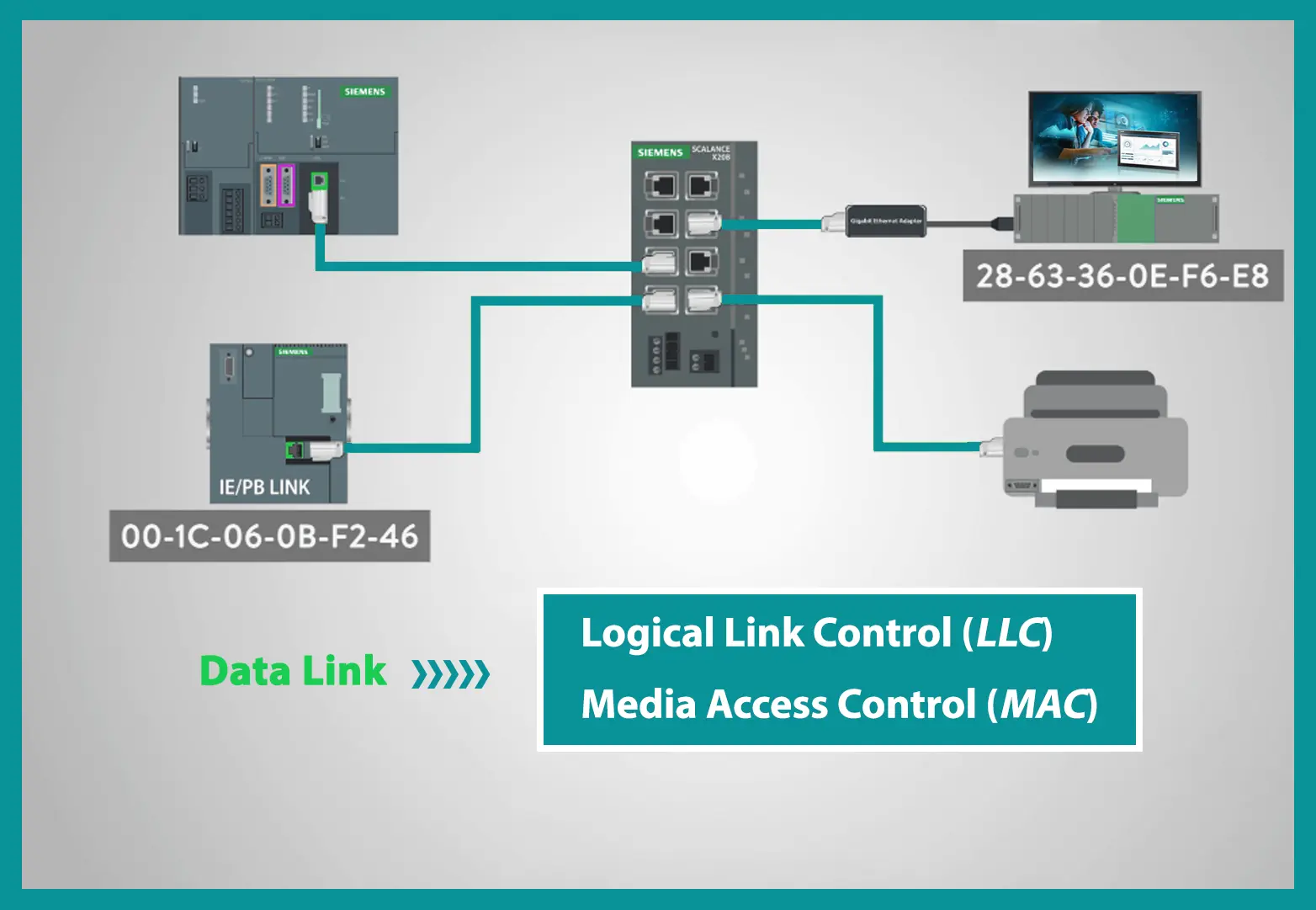
The data link layer ensures smooth and reliable communication within a LAN. It’s divided into two main sublayers:
Logical Link Control (LLC): Manages data flow between devices and ensures that frames are transmitted accurately.
Media Access Control (MAC): Uses unique MAC addresses to identify devices on the network, controlling who can transmit data and when.
Ethernet uses a method called CSMA/CD (Carrier Sense Multiple Access with Collision Detection) to manage data transmissions:
Before sending data, the device “listens” to ensure the line is free.
If two devices transmit simultaneously, a collision occurs.
Both devices wait for a random delay before resending their data.
Modern Ethernet systems using switches and full-duplex communication have virtually eliminated collisions, greatly improving performance and network efficiency.
Network Topologies
Modern Ethernet networks typically use a star topology, where each device connects to a central switch. This reduces congestion and isolates faults better than the older bus topology, where all devices shared the same cable.
Advantages of Ethernet
✅ High Speed and Reliability: Supports data rates from 10 Mbps to over 400 Gbps.
✅ Scalability: Easy to expand networks by adding switches and routers.
✅ Cost-Effective: Copper cabling and standard hardware make Ethernet affordable.
✅ Low Latency: Ideal for real-time applications like VoIP and video conferencing.
✅ Compatibility: Works with most network devices and protocols.
Disadvantages of Ethernet
⚠️ Limited Distance (for Copper): Standard twisted pair cables reach about 100 meters.
⚠️ Installation Complexity: Requires structured cabling for large networks.
⚠️ Less Mobility: Wired connections lack the flexibility of Wi-Fi.
The Future of Ethernet
Ethernet continues to evolve with Gigabit, 10G, 40G, and 400G standards, meeting the rising demands of data centers, cloud computing, and IoT devices. Technologies like Power over Ethernet (PoE) now deliver both data and power through a single cable, further expanding Ethernet’s versatility.
From connecting small home offices to powering vast industrial networks, Ethernet remains the most trusted, efficient, and scalable wired networking technology worldwide.
Conclusion
Ethernet’s enduring success lies in its simplicity, reliability, and adaptability. Whether you’re linking computers in a small office or designing a high-speed industrial network, Ethernet offers the ideal foundation for secure and efficient data communication.