





When comparing circuit breakers vs fuses, choosing the right electrical protection system is a critical decision for residential, commercial, and industrial applications. While both solutions protect against overloads and short circuits, circuit breakers offer greater safety, reliability, and long-term value.
In this article, we’ll explore the key differences between circuit breakers and fuses and share eight important reasons why circuit breakers are the superior choice.
Circuit Breakers vs Fuses: What’s the Difference?
When comparing circuit breakers vs fuses, the main difference lies in how each device responds to electrical faults and protects a system from overloads and short circuits.
A fuse box channels incoming electrical current and distributes it through individual fuses. When a circuit experiences excess current, the fuse’s internal metal element melts, stopping the electrical flow and preventing potential fire hazards.
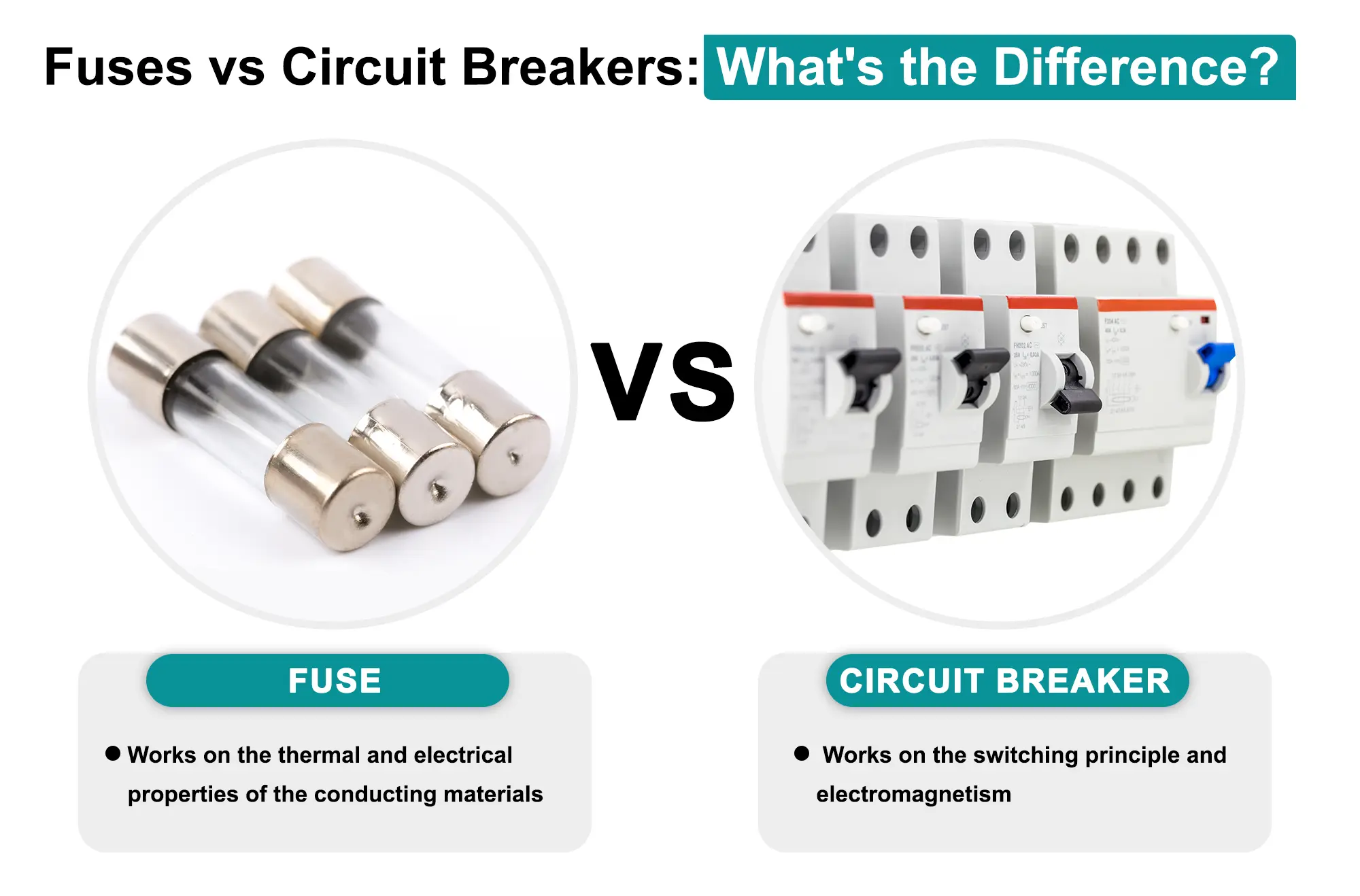
A circuit breaker serves the same protective function but interrupts power flow using a mechanical switching mechanism. Unlike fuses, which must be replaced after each event, circuit breakers can be reset easily — often by simply flipping a switch.
Why Should I Choose A Circuit Breaker over a Fuse
Here are eight key reasons why circuit breakers are the better solution for modern electrical protection:
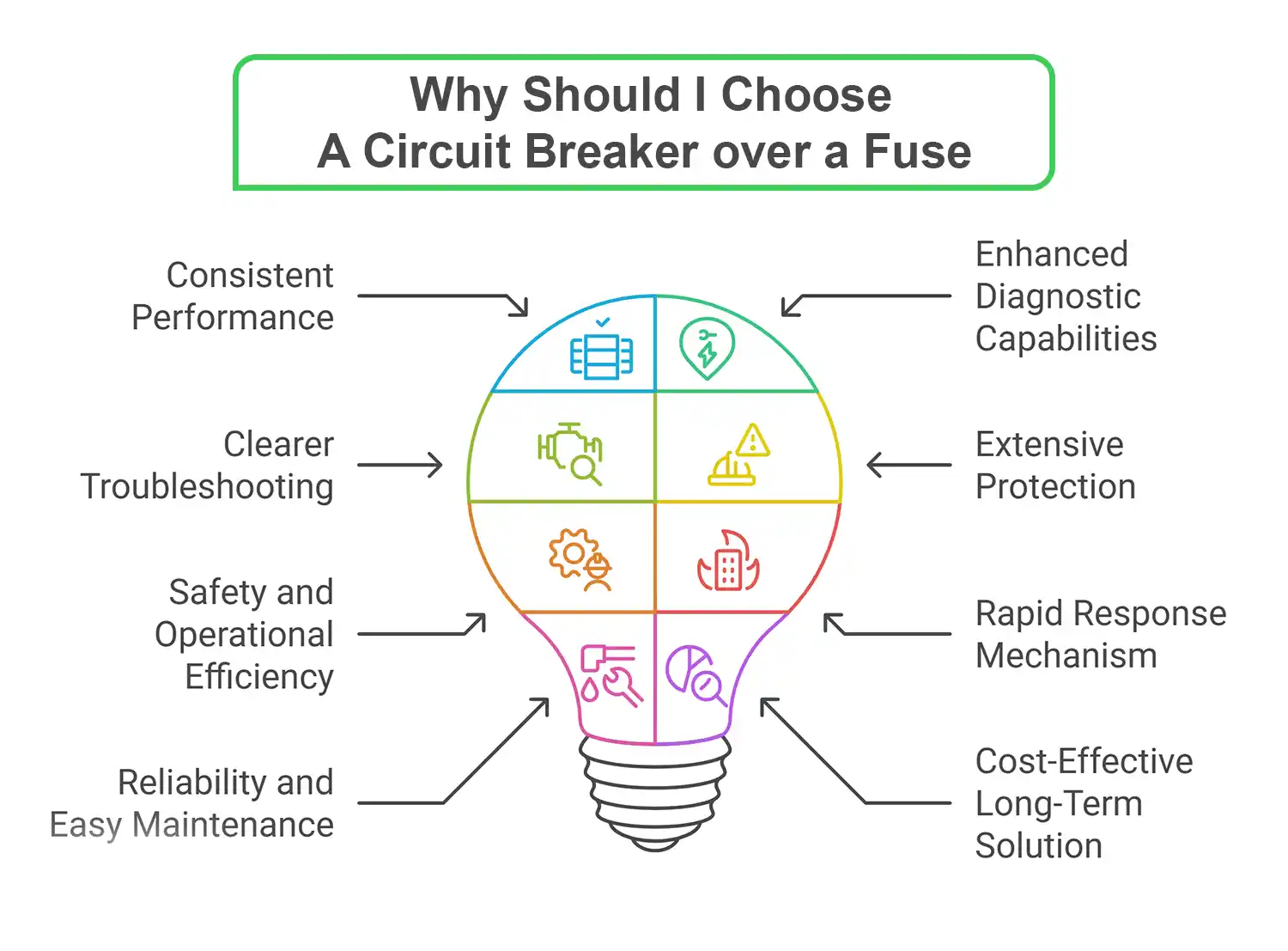
1. Consistent Performance
Circuit breakers provide stable and reliable operation over time. Fuses can degrade and trip due to aging, leading to unnecessary power interruptions. Circuit breakers operate reliably for years without frequent replacements, reducing downtime and maintenance hassles.
2. Enhanced Diagnostic Capabilities
When a breaker trips repeatedly, it typically signals an actual wiring or equipment issue, making it easier for electricians to identify and fix problems. In contrast, fuses may blow due to minor faults or wear, providing less diagnostic clarity.
3. Clearer Troubleshooting
Circuit breakers make it easier to pinpoint the exact cause of electrical disruptions. This clarity speeds up maintenance and reduces the risk of misdiagnosis, saving time and improving overall system reliability.
4. Extensive Protection
Fuses offer only basic protection, whereas circuit breakers handle modern electrical loads and provide superior protection against both overloads and short circuits. This makes them better suited for today’s energy-intensive homes and businesses.
5. Safety and Operational Efficiency
Circuit breakers are safer to operate than fuse boxes. Replacing a fuse with an incorrect rating can cause fire hazards — a risk eliminated by breakers.
Many breakers include ground-fault protection (such as GFCI in the U.S.), reducing electrocution risks in wet or high-risk areas — an essential safety feature not found in traditional fuse systems.
6. Rapid Response Mechanism
Circuit breakers respond faster to electrical faults. They trip at lower thresholds than fuses, preventing excess current from damaging sensitive electronics, wiring, or appliances.
7. Reliability and Easy Maintenance
Unlike fuses that must be replaced after every incident, circuit breakers can be reset. Their durable design, tested during manufacturing, ensures long-term reliability and less maintenance work.
8. Cost-Effective Long-Term Solution
Although circuit breakers cost more initially, they save money over time. Fuses require ongoing replacements, while breakers have a lower total cost of ownership — making them a more economical investment in the long run.
Final Thoughts
Choosing circuit breakers instead of fuse boxes is a smarter solution when comparing circuit breakers vs fuses, as they deliver higher safety, better operational efficiency, easier troubleshooting, and long-term cost savings.
If you’re planning a new electrical installation or upgrading an existing system, GeeTech Group can help you choose the most suitable circuit breaker for your application — ensuring reliable protection, compliance with modern standards, and long-term peace of mind.
Understanding the differences between circuit breakers vs fuses helps you make safer and more cost-effective electrical decisions.
Contact GeeTech Group :