





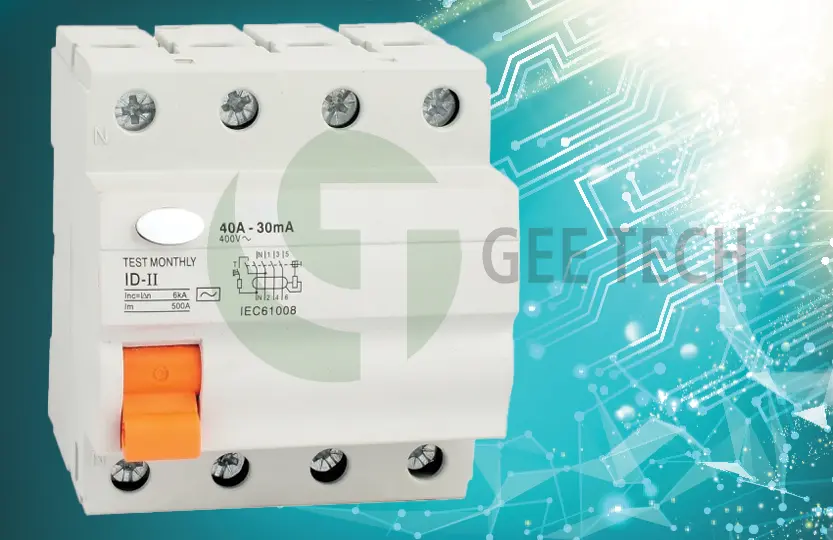
In this article from the GeeTech Group series, we explore one of the most important safety components in modern electrical systems — the Residual Current Device (RCD).
You’ll learn what an RCD is, how it works, its different types, how to test it, and which global brands — Schneider Electric, Siemens, and ABB — produce the best and most reliable RCD solutions.
What Is a Residual Current Device (RCD)?
A Residual Current Device (RCD), also known as a Ground Fault Circuit Interrupter (GFCI), is a life-saving electrical safety device that instantly disconnects power when it detects an imbalance in electrical current.
This quick action helps prevent electric shocks, injuries, and electrical fires.
Unlike fuses or circuit breakers that primarily protect electrical circuits, RCDs protect people — cutting off power within milliseconds if current leaks through an unintended path, such as through a person’s body.
Why RCDs Are Important
RCDs are especially critical in wet environments — bathrooms, kitchens, gardens, or outdoor workspaces — where the risk of electric shock is significantly higher.
For example, while mowing the lawn or using outdoor tools, an RCD can instantly cut power if a cable is damaged, protecting users from potentially fatal shocks.
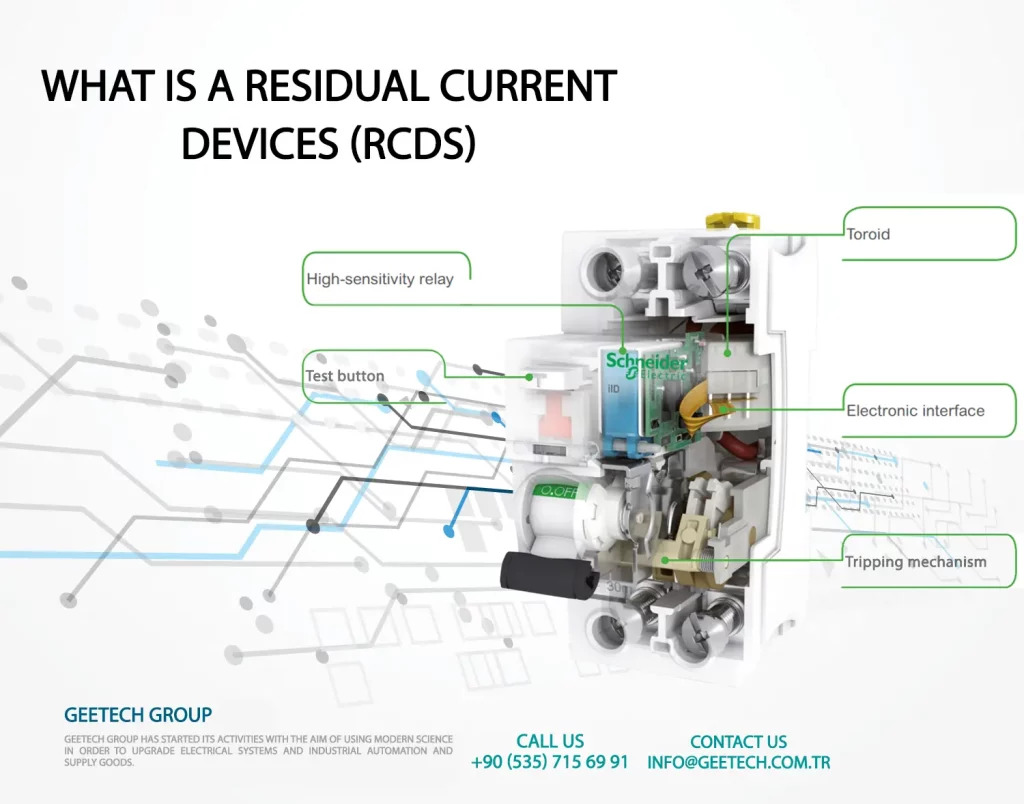
What Is a Residual Current Device (RCD)?
A Residual Current Device (RCD), also known as a Ground Fault Circuit Interrupter (GFCI), is a life-saving electrical safety device that instantly disconnects power when it detects an imbalance in electrical current.
This quick action helps prevent electric shocks, injuries, and electrical fires.
Unlike fuses or circuit breakers that primarily protect electrical circuits, RCDs protect people — cutting off power within milliseconds if current leaks through an unintended path, such as through a person’s body.
Why RCDs Are Important
RCDs are especially critical in wet environments — bathrooms, kitchens, gardens, or outdoor workspaces — where the risk of electric shock is significantly higher.
For example, while mowing the lawn or using outdoor tools, an RCD can instantly cut power if a cable is damaged, protecting users from potentially fatal shocks.
How Do Residual Current Devices Work?
An RCD constantly monitors the flow of electric current through live and neutral wires in a protected circuit.
Here’s how it works:
Under normal operation, the live and neutral currents are equal and flow smoothly.
If a leakage current occurs — for example, if someone touches a live wire or if current escapes to the ground — an imbalance is created.
This imbalance generates a magnetic difference inside the RCD’s coil and iron core.
The RCD’s trip mechanism detects this imbalance and instantly disconnects the circuit, preventing electric shock or fire.
Most RCDs also have “Test” and “Reset” buttons, allowing users to verify their functionality and restore power after a trip.
In short: RCDs act as your last line of defense against electric shock and are essential in every safe electrical installation.
Types of Residual Current Devices (RCDs)
According to IEC 60755 standards, several RCD types exist — each designed for different electrical systems and applications.
🔸 Based on Detection Type
Type AC RCDs:
Detect alternating current (AC) faults — suitable for general residential and light commercial use.Type A RCDs:
Detect both AC and pulsating direct current (DC) faults. Common in modern electronic appliances and single-phase circuits.Type F RCDs:
Designed for circuits with single-phase variable-speed drives (like washing machines or HVAC units).Type B RCDs:
Provide advanced protection for three-phase systems, EV chargers, PV installations, and medical equipment, detecting AC, DC, and smooth DC faults.
🔸 Based on Installation Type
Fixed RCDs:
Installed in consumer units (distribution boards). They protect entire circuits, wiring, and connected devices.Socket-Outlet RCDs:
Built directly into electrical outlets, providing localized protection for connected appliances.Portable RCDs:
Plug-in units offering temporary, mobile protection — perfect for outdoor work or portable equipment.
How to Test a Residual Current Device (RCD)
Regular testing ensures your RCD is working correctly and can protect you when needed.
Follow these simple steps:
Plug a small lamp or appliance into a socket and switch it on.
Ensure the RCD’s main switch is ON.
Turn off other electronic appliances (TVs, radios, etc.).
Press the “Test” button on the RCD. It should immediately trip and cut power.
Verify that the lamp turns off, confirming disconnection.
Reset the RCD using the “Reset” button and confirm power is restored.
If the RCD does not trip during the test, contact a qualified electrician immediately.
Testing should be performed at least every three months to ensure reliable operation.
Leading Brands of Residual Current Devices (RCDs)
🔹 Siemens RCDs
Siemens is globally recognized for innovation and electrical safety.
Their Residual Current Devices (RCDs) — also called Ground Fault Circuit Interrupters (GFCIs) — are engineered to protect users from electrical shock and reduce the risk of fires caused by leakage currents.
Key Features:
High detection sensitivity
Fast disconnection time
Advanced designs for both single- and three-phase applications
Siemens RCDs comply with international safety standards and are trusted in residential, commercial, and industrial systems.
➡️ Contact GeeTech Group for expert consultation and purchase of Siemens RCD products.
🔹 ABB RCDs
ABB offers a wide range of high-performance RCDs known for accuracy, reliability, and long service life.
Their RCDs instantly disconnect circuits upon detecting imbalance, preventing shocks and electrical fires.
Advantages:
Available in multiple sensitivity and current ratings
Suitable for residential, commercial, and industrial use
Meet or exceed global safety standards
ABB RCDs are engineered for durability and efficient protection in challenging electrical environments.
➡️ Order ABB RCDs from GeeTech Group for certified, original products and expert guidance.
🔹 Schneider Electric RCDs
Schneider Electric manufactures premium Residual Current Devices (RCDs) designed to enhance safety and energy reliability.
Their RCDs provide rapid fault detection and instant circuit interruption, protecting users from electric shock and equipment damage.
Notable Features:
Compact, modular design
Wide range of current ratings and trip sensitivities
Compliance with IEC/EN safety standards
Schneider RCDs are widely used across residential, commercial, and industrial applications for dependable protection.
➡️ Consult GeeTech Group for product selection and pricing of Schneider Electric RCDs.
Residual Current Device Price and Consultation
To get the latest Residual Current Device (RCD) price list, and for free expert consultation, contact the professionals at GeeTech Group.
📞 Call: +90 (342) 502 22 62
💬 WhatsApp: Available for quick product support and technical advice.
GeeTech Group offers original RCDs from Siemens, ABB, and Schneider Electric, ensuring reliable, certified, and high-quality electrical safety solutions.