





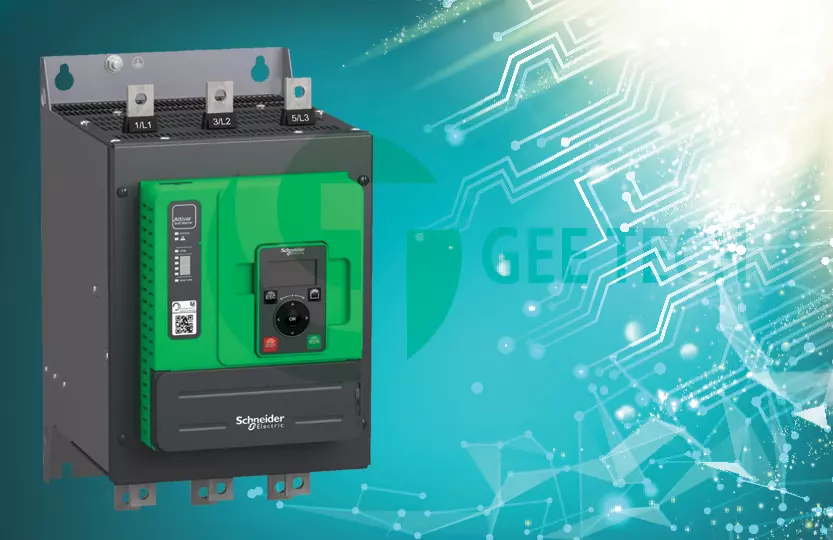
In this article from GeeTech Group, we explore What is a Soft Starter, how it works, and its applications in electrical and industrial systems. You’ll also learn about Siemens, Schneider, and ABB soft starters, including their key features and advantages.
What is a Soft Starter?
A soft starter is an electronic motor-control device designed to provide a smooth, controlled startup for electric motors. Instead of applying full voltage instantly—something that causes high inrush current and mechanical shock—the soft starter gradually increases the supply voltage, allowing the motor to accelerate gently and predictably.
By reducing sudden electrical and mechanical stress, soft starters help:
Minimize inrush current
Lower mechanical strain on the motor and connected equipment
Extend motor and system lifespan
Improve operational reliability and reduce downtime
Soft starters are widely used in industrial applications where smooth starts and protection against voltage surges are essential. Common uses include pumps, fans, conveyors, crushers, compressors, and mills, where controlled acceleration prevents equipment damage and enhances overall efficiency.
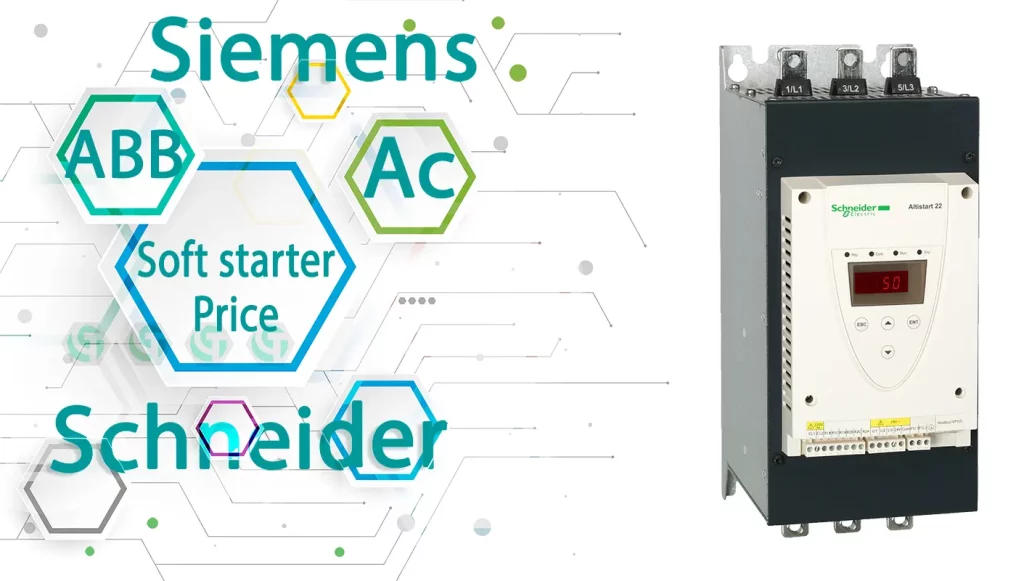
How a Soft Starter Works
A soft starter controls the motor’s startup process by managing how much voltage is delivered during the initial acceleration phase. Instead of applying full power instantly, it uses SCRs (Silicon-Controlled Rectifiers) to regulate the phase angle of the voltage, allowing the motor to ramp up gradually. This controlled voltage increase reduces inrush current, prevents mechanical shock, and ensures smoother acceleration.
As the motor reaches its rated speed, the system activates a bypass contactor, which connects the motor directly to the power supply. This improves overall efficiency by removing heat losses generated in the SCRs during continuous operation.
Modern soft starters go beyond basic voltage ramping. Advanced models can:
Adjust voltage dynamically based on real-time motor load
Control torque more accurately during acceleration
Monitor motor behavior and detect overloads or abnormal conditions
Provide smooth stopping by gradually reducing voltage, minimizing torque shock and preventing issues like water hammer in pump systems
Because motor torque is proportional to the square of the applied voltage, even small reductions in voltage significantly reduce torque. For example:
A 50% voltage reduction lowers torque by roughly 75%
This voltage–torque relationship is crucial for protecting machinery during startup and shutdown.
Some advanced soft starters maintain voltage control even after the motor is running, while others only use SCRs during starting and stopping, then switch to bypass mode to maximize energy efficiency.
Common Industrial Applications of Soft Starters
Soft starters are widely used across industries to reduce starting current and protect heavy-load machines that require high starting torque. They not only prolong motor life but also improve safety and efficiency. Here are some common industrial applications:
Saws and Sawmills
Sawmill machinery requires smooth starts and quick stops. Soft starters provide extra torque during startup and handle heavy loads efficiently. Built-in braking features allow fast stops without additional brake systems. Advanced motor protection (I²t, PTC, PT100) prevents overheating, and smart jam detection reacts instantly to stuck materials, ensuring safe and reliable operation.
Crushers
In crushers, soft starters enable motors to start gradually, reducing mechanical shock and electrical stress. This minimizes equipment damage, prevents power surges, and extends machinery lifespan, while maintaining smooth, reliable performance.
Pumps
Pumps are prone to pressure spikes (water hammer) if started abruptly. Soft starters prevent these issues and can detect problems like dry running, automatically shutting off the pump before damage occurs. This enhances both equipment safety and process reliability.
Conveyor Belts
Belt-driven systems are sensitive to jerky starts, which can cause misalignment or mechanical damage. Soft starters provide controlled torque and load monitoring, alerting operators to slippage or jams early to reduce downtime.
Fans and Blowers
In belt-driven fans, sudden torque can lead to belt slip and lower efficiency. Gradual starts protect both belts and motor bearings, while monitoring tools can detect blockages, such as clogged filters, preventing airflow disruptions.
Compressors
Compressors face back pressure at startup, which stresses the motor. Soft starters provide gentle acceleration, extend motor lifespan, and improve energy efficiency. Advanced models offer phase reversal protection and detect idle conditions to optimize performance. These benefits also apply to other industrial machines like mixers, crushers, and grinders.
Advantages of Using a Soft Starter
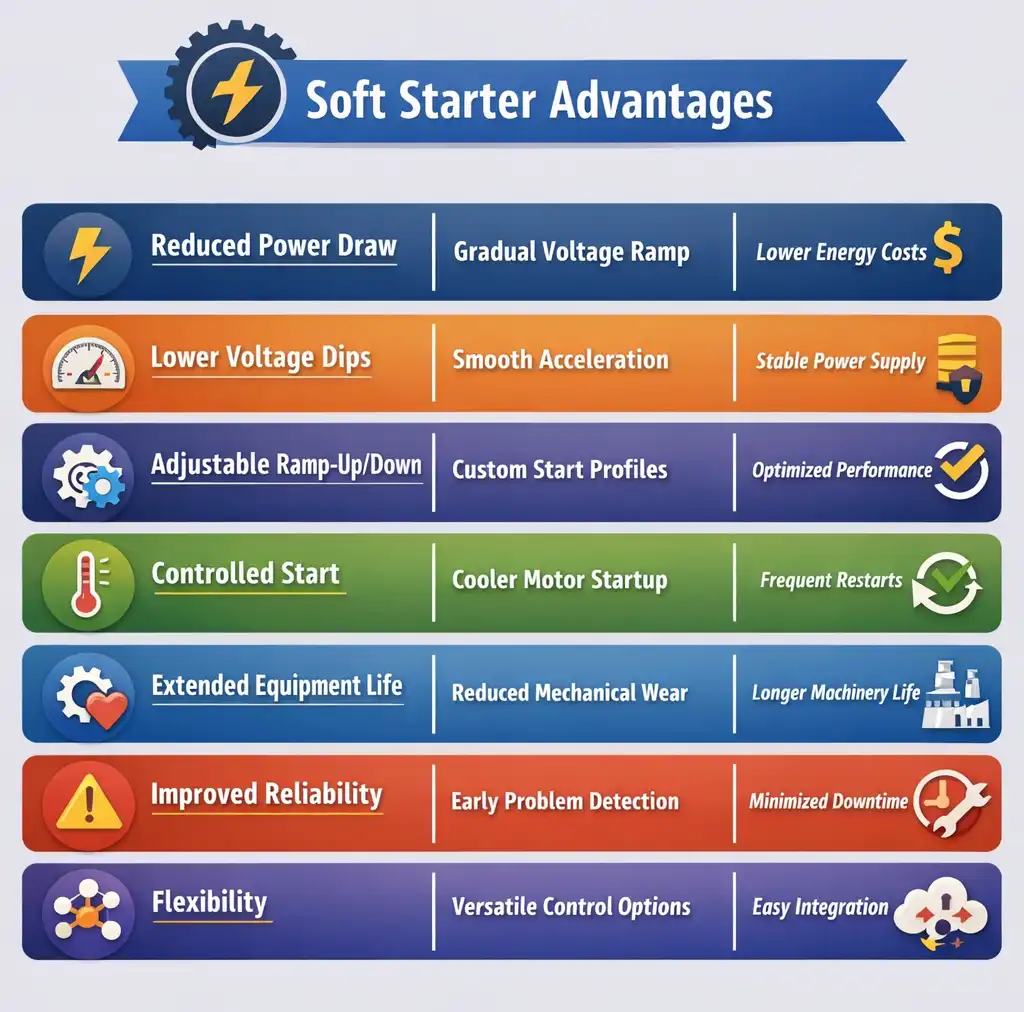
Soft starters offer a range of benefits for industrial motors and equipment, improving performance, reliability, and longevity:
Reduced Power Draw at Startup
Gradual voltage ramping prevents power surges, reducing electrical stress and easing load on the network.Lower Risk of Voltage Dips
Smooth acceleration avoids tripping other equipment or dimming lights, especially important for weak grids or generator-powered systems.Adjustable Ramp-Up and Ramp-Down
Start and stop profiles can be customized to fit specific machines or processes, ensuring optimal performance.Controlled Start
Motors stay cooler during startup, enabling frequent starts without overheating or damage.Extended Equipment Life
Reduced mechanical shock lowers wear on belts, gears, and other moving parts, extending the lifespan of machinery.Improved System Reliability
Integrated monitoring detects issues early—such as blockages, dry runs, or belt slips—preventing costly downtime.Flexibility
Soft starters support versatile start/stop operations and advanced vector braking. They also offer multiple communication options for integration into modern automation systems.Cost Effectiveness
Durable components and coated circuit boards ensure long-lasting operation. Built-in load monitoring protects equipment, safeguarding your investment.
Should You Use a Soft Starter or a Drive?
Both soft starters and motor drives help motors start with reduced mechanical and electrical stress, but the choice depends on your operational needs:
Soft Starter:
Best for motors that run at full speed and only need a gentle start to reduce stress. Soft starters are cost-effective, easy to install, and simple to program. They provide essential protection and smooth operation for most industrial facilities.Motor Drive (VFD / Inverter):
Ideal if you need speed variation or dynamic control during operation. Motor drives allow precise speed adjustments, energy optimization, and advanced process control.
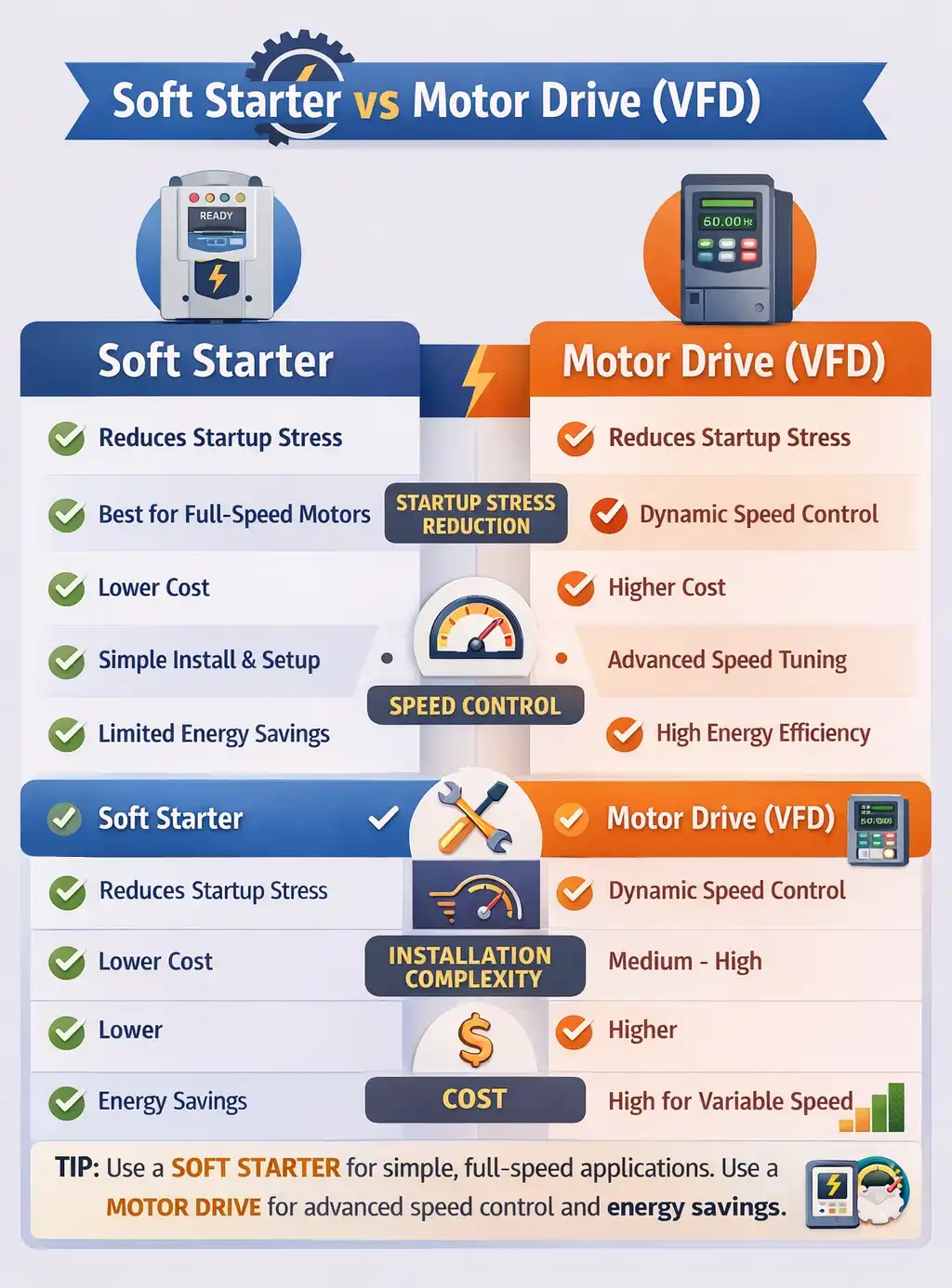
Tip: Choose a soft starter for simple, reliable, and cost-efficient smooth starts, and a motor drive when process control, variable speed, or energy efficiency is critical.
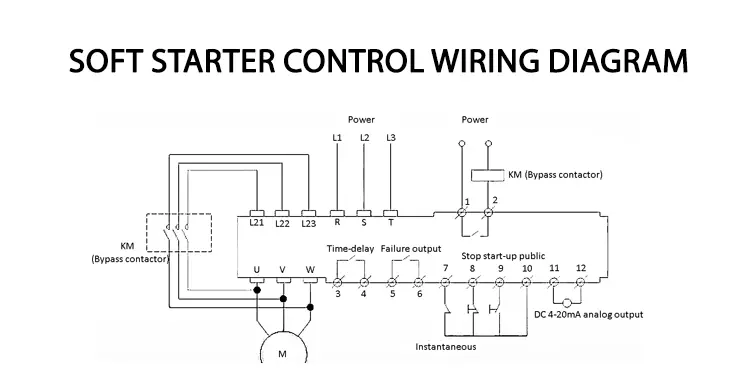
Soft Starter Control Wiring Diagram
A typical soft starter wiring diagram includes the following components:
Input terminals for the main power supply
Output terminals connected to the motor
Bypass contactor connected in parallel
Many modern soft starters feature built-in bypass contactors, eliminating the need for additional external wiring and simplifying installation.
In a standard diagram, a three-phase soft starter is shown with incoming terminals at the top and outgoing terminals at the bottom. The bypass contactor is connected in parallel with the soft starter. With modern integrated designs, an extra bypass contactor is usually not required.
Working Principle
Startup: When the motor is switched on, the soft starter gradually increases voltage and current. This reduces inrush current, preventing electrical and mechanical stress. Once the motor reaches full speed and full-load current, the soft starter activates the bypass contactor, allowing the motor to run directly from the main power supply.
Shutdown: When stopping the motor, the bypass contactor is deactivated, reconnecting the motor to the soft starter. The starter then gradually decreases voltage and current, ensuring a smooth, controlled stop and minimizing torque shock and mechanical wear.
This controlled start and stop process protects the motor, reduces wear on mechanical components, and improves system reliability, making soft starters essential in industrial applications.
Click on the button below to view the Complete Soft Starter Diagram in PDF Format :
soft starter control wiring diagram pdf
Difference Between Soft Starter and Variable Speed Drive (VSD)
| Feature | Soft Starter | Variable Speed Drive (VSD) |
|---|---|---|
| Control Method | SCR phase angle control | IGBT PWM control |
| Startup Current | Reduced gradually | Fully controlled |
| Speed Control | Fixed speed | Variable speed |
| Complexity | Simple setup | Advanced setup |
| Applications | Pumps, fans, compressors | Conveyors, process control |
| Cost | Lower | Higher |
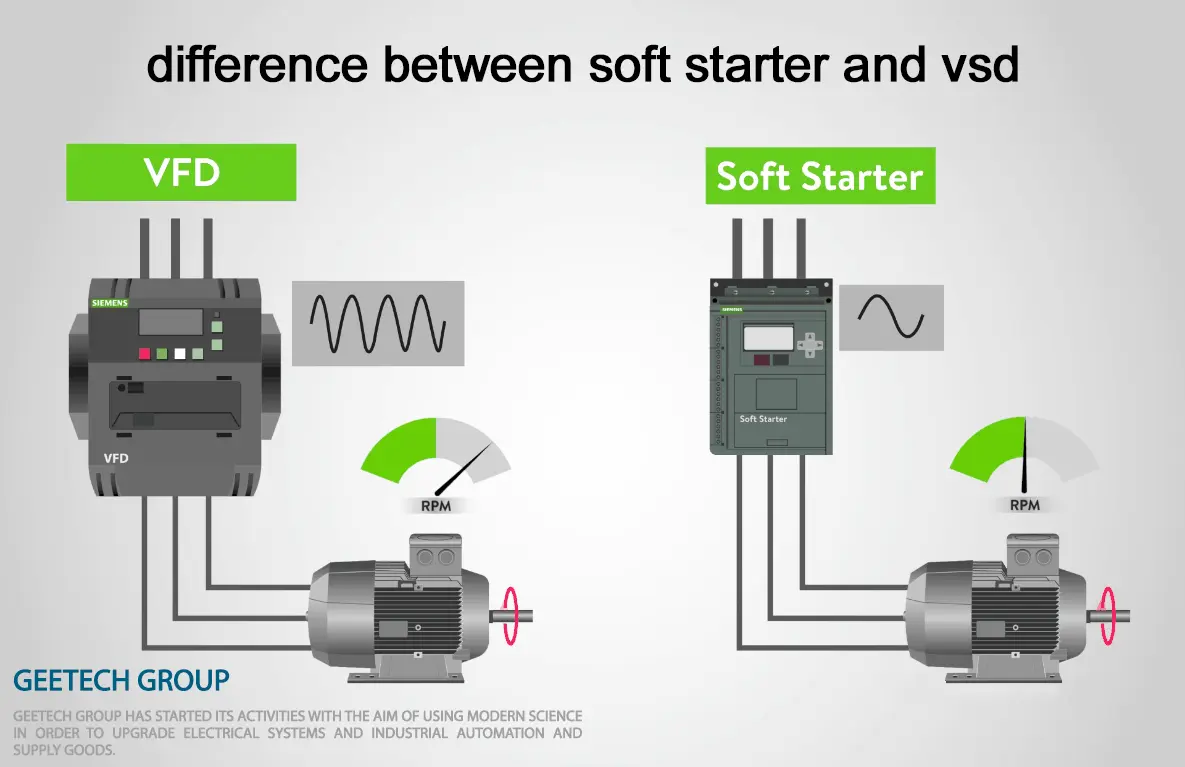
Soft Starters and Variable Speed Drives (VSDs) are both used to control electric motors, but they operate differently and serve distinct purposes in industrial applications.
Key Differences
Control Method:
Soft Starters use SCR (Silicon-Controlled Rectifier) phase angle control to manage startup voltage, while VSDs rely on IGBT (Insulated-Gate Bipolar Transistor) PWM control for precise speed regulation.Startup Current:
Soft Starters gradually reduce inrush current, protecting motors from mechanical and electrical stress. VSDs offer fully controlled startup currents for advanced motor management.Speed Control:
Soft Starters maintain fixed motor speed, suitable for applications requiring smooth starts. VSDs provide variable speed control, allowing optimization for energy savings and process control.Complexity:
Soft Starters are simple to install and configure, making them cost-effective for standard motor applications. VSDs involve advanced setup due to their dynamic speed control features.Applications:
Soft Starters are ideal for pumps, fans, and compressors. VSDs are preferred for conveyors, process control, and applications requiring precise speed regulation.Cost:
Soft Starters have a lower initial cost and minimal maintenance requirements. VSDs are more expensive, but offer greater energy efficiency and motor management capabilities.
Summary
Choose a Soft Starter for cost-effective, smooth starting of fixed-speed motors where reducing startup stress is the main concern.
Choose a VSD when you need speed control, energy efficiency, and advanced motor management for dynamic industrial processes.
A soft starter for AC motors controls the voltage ramp-up during startup, minimizing mechanical stress and current peaks. By reducing the impact on the electrical network, it enhances energy efficiency and protects the motor from damage.
Siemens Soft Starter
Siemens Soft Starters are recognized worldwide for reliability and advanced motor control features, ideal for industrial automation, HVAC, and water systems.
Key Features:
Adjustable acceleration and deceleration ramps
Current and voltage monitoring
Integrated bypass contactor
Communication options: PROFINET, Modbus, etc.
Popular Models: SIRIUS 3RW30, 3RW40, 3RW44
📞 Contact GeeTech Group for Siemens Soft Starter pricing and orders:
+90 (342) 502 22 62
Schneider Soft Starter
Schneider Electric Soft Starters, such as the Altistart ATS series, provide intelligent motor control and comprehensive protection.
Key Features:
Advanced motor torque control
Integrated bypass functionality
Overload and short-circuit protection
Industrial communication support
Applications: Pumps, compressors, conveyors – offering reliability and easy setup
📞 For Schneider Soft Starter inquiries and quotes:
+90 (342) 502 22 62
ABB Soft Starter
ABB Soft Starters (e.g., PSTX and PSR series) deliver smooth motor starting, energy efficiency, and smart monitoring capabilities.
Key Features:
Smooth voltage ramp-up and ramp-down
Built-in protection: overload, phase loss, short-circuit
Energy-efficient startup control
Integrated digital control and monitoring panel
Communication-ready: Modbus, Profibus, Ethernet
Applications: Water treatment, oil & gas, mining, HVAC, manufacturing
📞 For ABB Soft Starter information and support:
+90 (342) 502 22 62
Why Choose a Soft Starter?
Soft starters are ideal for applications requiring:
Reduced motor startup current
Lower mechanical wear
Improved system reliability
Energy-efficient operation
Whether you choose Siemens, Schneider, or ABB, these solutions provide superior protection, efficiency, and smooth operation for industrial AC motors.
Soft Starter for AC Motors
A soft starter AC unit controls the voltage ramp-up of an AC motor during startup, minimizing mechanical stress and current peaks.
By reducing the impact on the power network, it enhances energy efficiency and protects the motor from damage.
Contact GeeTech Group
For expert advice, product recommendations, and quotes on Soft Starters, reach out to our team:
GeeTech YouTube channel
🌐 We supply Siemens, Schneider, and ABB soft starters across Turkey and globally.