


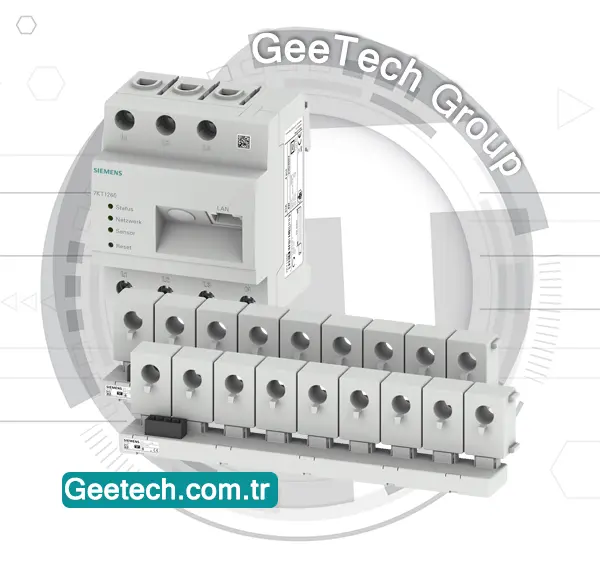
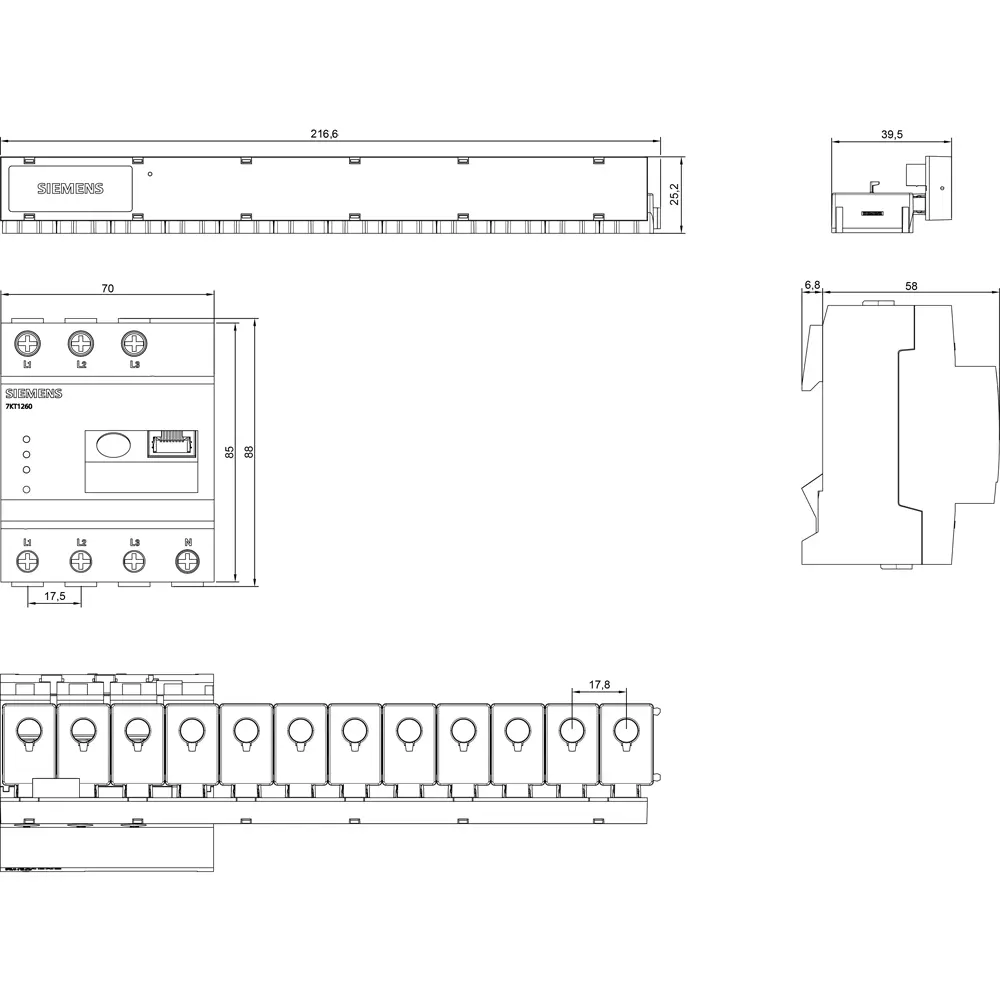
7KT1223
starter kit 24 2x 12 sensor bars + 24x 40 A sensor + data manager 7KT1260
- Stock status:
- Call for availability
- Manufacturer:
- Siemens
- Product code:
- 7KT1223
Main documents
- Product datasheet
- Instruction sheet
- Catalogue
Related products
| Product | |
| Article Number (Market Facing Number) | 7KT1222 |
| Product Description | starter kit 18 2x 9 sensor bars + 18x 40 A sensor + data manager 7KT1260 |
| Product family | 7KT PAC1200 Measuring Devices |
| Product Lifecycle (PLM) | PM300:Active Product |
| Price data | |
| Region Specific PriceGroup / Headquarter Price Group | 15C / 1BK |
| List Price | Show prices |
| Customer Price | Show prices |
| Surcharge for Raw Materials | None |
| Metal Factor | None |
| Additional Product Information | ||
| EAN | 4001869528557 | |
| UPC | Not available | |
| Commodity Code | 90283019 | |
| LKZ_FDB/ CatalogID | LV10 | |
| Product Group | 5522 | |
| Group Code | P310 | |
| Country of origin | Germany | |
| Compliance with the substance restrictions according to RoHS directive | Since: 15.12.2015 | |
| Product class | B: return restricted, please contact your Siemens partner/contact | |
| WEEE (2012/19/EU) Take-Back Obligation | Yes | |
| REACH Art. 33 Duty to inform according to the current list of candidates | ||
| SCIP number | 4faa1bea-102d-4b8e-8f95-698c0dbffa87 | |
Product Description
7KT1223
The Siemens Starter Kit 7KT1223 provides a complete setup for current measurement and data management within energy monitoring systems. This kit is part of the 7KT PAC1200 Measuring Devices series and offers a range of components for precise current monitoring and data handling.

Key Features and Specifications:
- Sensor Bars: The kit includes 2 x 12 sensor bars to accommodate varied installation needs.
- Current Sensors: It comes with 24 sensors, each with a 40 A capacity, for accurate current measurement across multiple circuits.
- Data Manager 7KT1260: This component centralizes data from sensors, enabling real-time monitoring and efficient data management.
Technical Specifications:
- Number: 7KT1223
- Description: Starter kit with extended sensor bars and current sensors, along with a data manager
- Product Family: 7KT PAC1200 Measuring Devices
- Product Lifecycle: PM300: Active Product
Additional Product Information:
- EAN: 4001869528564
- Commodity Code: 90283019
- Catalog ID: LV10
- Product Group: 5522
- Country of Origin: Germany
- RoHS Compliance: Since 15.12.2015
- Product Class: B – Return restricted, please contact Siemens for returns
- WEEE (2012/19/EU) Take-Back Obligation: Yes
Compliance and Environmental Considerations:
- REACH Compliance: In compliance with REACH Art. 33, the product includes lead (CAS-No. 7439-92-1) in quantities above 0.1% by weight.
- SCIP Number: eb059091-2fb1-459f-91d0-fd2ad9cf5493
Applications:
This starter kit is ideal for commercial and industrial facilities requiring advanced energy monitoring. It enables organizations to track energy usage accurately and support compliance with environmental regulations through reliable data management.
Conclusion:
The Siemens 7KT1223 Starter Kit is a versatile and dependable option for energy monitoring projects, equipped with high-quality sensors and data management components. It aids in optimizing power usage and meeting sustainability standards.

Frequently Asked Questions
What Are Siemens Used to Measure?
✅Siemens (S) are units used to measure electrical conductivity, which refers to a material's ability to conduct electric current. The standard unit for conductivity is Siemens per meter (S/m), with milliSiemens per meter (mS/m) being commonly used for smaller values. Electrical conductivity is crucial for understanding how well a material can transmit electricity. The Siemen, a unit of electrical conductance, is the inverse of an Ohm (Ω), which measures electrical resistance. This makes Siemens an essential measurement in fields such as electronics, engineering, and material science.
What Are the Names of Measuring Devices?
✅Measuring devices come in various types, each serving specific purposes across different industries. Some of the most common measurement tools include vernier calipers, micrometers, dial gauges, and various types of gauges. Other essential devices are bubble levels, protractors, and rulers. These tools are widely used in production processes, quality control, and engineering to ensure precise measurements and accuracy.
What Are Three Measuring Devices?
When it comes to measuring length, there are several precise tools available. Three commonly used instruments include:
✅ 1.Rulers - Simple and versatile, rulers are used for measuring shorter lengths, typically in centimeters or inches.
✅ 2. Tape Measures - Ideal for measuring longer distances, tape measures are flexible and portable, making them useful for tasks ranging from home improvement to construction.
✅ 3. Micrometer Screw Gauges - Designed for measuring small objects with high precision, micrometer screw gauges can measure dimensions in micrometers.
Among these, the vernier caliper stands out as the most precise tool. It features sliding jaws attached to a graduated beam, allowing for accurate measurements of both internal and external dimensions.
What Is a Power Monitoring Device?
✅ A power monitoring device is an instrument used to measure and track power consumption. It helps in monitoring the usage of electricity, which is essential for identifying areas where energy can be saved and efficiency can be improved. While electricity itself is invisible, it is a versatile and convenient form of energy that powers various systems, converting into heat, light, sound, and mechanical power. By providing real-time data on energy usage, power monitoring devices support energy-saving activities, cost reduction, and improved energy management. These devices are commonly used in homes, businesses, and industrial settings.
How Do I Replace My Energy Meter?
✅ Replacing your energy meter, such as when installing a NES smart meter, involves a few important steps to ensure safety and proper installation. Here’s a simple guide:
1. Turn Off Power: Begin by turning off the line power to the existing energy meter to ensure a safe working environment.
2. Remove the Terminal Cover: Carefully take off the terminal cover from the existing meter to access the wiring.
3. Disconnect Wires: Remove the line and load wires connected to the terminals of the existing meter. Make sure to label or note where each wire connects for easier installation of the new meter.
4. Remove the Old Meter: Finally, detach the old energy meter from its mounting, ensuring all components are safely stored for future reference or recycling.
What Is the Difference Between a Power Meter and an Energy Meter?
we often get asked whether energy meters and power meters are the same. While both devices are essential for monitoring electricity usage, they serve different purposes.
✅Energy Meters: These instruments measure the total energy consumed over time, typically displayed in kilowatt-hours (kWh). Energy meters provide a cumulative record of electricity usage, helping users understand their overall consumption patterns and manage costs effectively.
✅Power Meters: In contrast, power meters measure the instantaneous rate at which energy is being used, usually indicated in watts (W) or kilowatts (kW). By offering real-time data, power meters enable users to gain insights into their electrical systems' immediate power demands, allowing for better management of energy resources.
In summary, while energy meters track total consumption, power meters focus on the rate of energy use, making them both valuable tools for energy management and efficiency.


Reviews
There are no reviews yet.